
Trauma, Stress & Dissociation · Self-reflection
PTSD Test: a free online PCL-5 self-check
This free online PTSD test uses the 20 statements of the PTSD Checklist for DSM-5 (PCL-5). It asks how much each post-traumatic stress symptom has bothered you in the past month, from flashbacks and nightmares to avoidance, mood changes and feeling on guard. Your total, from 0 to 80, can help you decide whether to seek a PTSD assessment.
PCL-5 scores describe symptom severity in the past month. Only a qualified professional can diagnose PTSD.
-
TIME FRAMEPast monthRate how much each problem has bothered you over the past month.
-
THE SCORE0 to 80 pointsEach of the 20 statements scores 0 (Not at all) to 4 (Extremely).
-
A KEY NUMBER31 to 33The VA reports that a PCL-5 total in this range or above suggests probable PTSD.
The self-check
Take the PTSD test
Think about a very stressful experience you have had. For each statement, choose how much that problem has bothered you in the past month, from Not at all to Extremely.
Some questions ask you to think about a stressful experience. You can pause or stop at any time. If you are thinking about suicide or feel unsafe, call or text 988 (Suicide & Crisis Lifeline) in the US, text HOME to 741741 to reach the Crisis Text Line, or find a helpline outside the US at findahelpline.com. If you are in immediate danger, call your local emergency number now.
Your result
How this page groups PCL-5 totals
- 0–20 Few PTSD symptoms reported
- 21–40 Some PTSD symptoms reported
- 41–60 Many PTSD symptoms reported
- 61–80 Severe PTSD symptoms reported
PCL-5 scores describe symptom severity in the past month. Only a qualified professional can diagnose PTSD.
All 20 statements ask about the past month.
The short answer
What does the PTSD test measure?
This PTSD test measures how much each of the 20 DSM-5 symptoms of post-traumatic stress disorder has bothered you in the past month, using the PCL-5 checklist from the VA National Center for PTSD. Totals run from 0 to 80, and initial research suggests a score of 31 to 33 or higher indicates probable PTSD. A diagnosis also needs at least one re-experiencing, one avoidance, two arousal and two mood symptoms lasting more than a month.
The PCL-5 was developed by staff at the VA’s National Center for PTSD and is in the public domain. Each of the 20 DSM-5 PTSD symptoms is rated from 0 (Not at all) to 4 (Extremely) for the past month, giving a total from 0 to 80. In its first evaluation with trauma-exposed college students, scores showed strong internal consistency (α = .94) and test-retest reliability. NIMH reports that about 6 in every 100 people will have PTSD at some point in their lives, and women are more likely than men to develop it. To meet the criteria, symptoms must last longer than a month, interfere with daily life such as relationships or work, and not be caused by medication, substance use or another illness. The course varies: some people recover within 6 months, while others have symptoms for a year or longer.
NIMH notes that PTSD symptoms usually begin within 3 months of a traumatic event but sometimes emerge later. If symptoms appeared long after the event, they are still worth raising with a professional. It is also natural to have some symptoms after a dangerous event, and most people recover over time. What matters is whether they last longer than a month and get in the way of daily life. Children and teens can react differently. NIMH notes that children under 6 may wet the bed after learning to use the toilet, forget how to talk, act out the event in play or become unusually clingy, while older children and teens may show disruptive behavior, guilt about not preventing harm or thoughts of revenge.
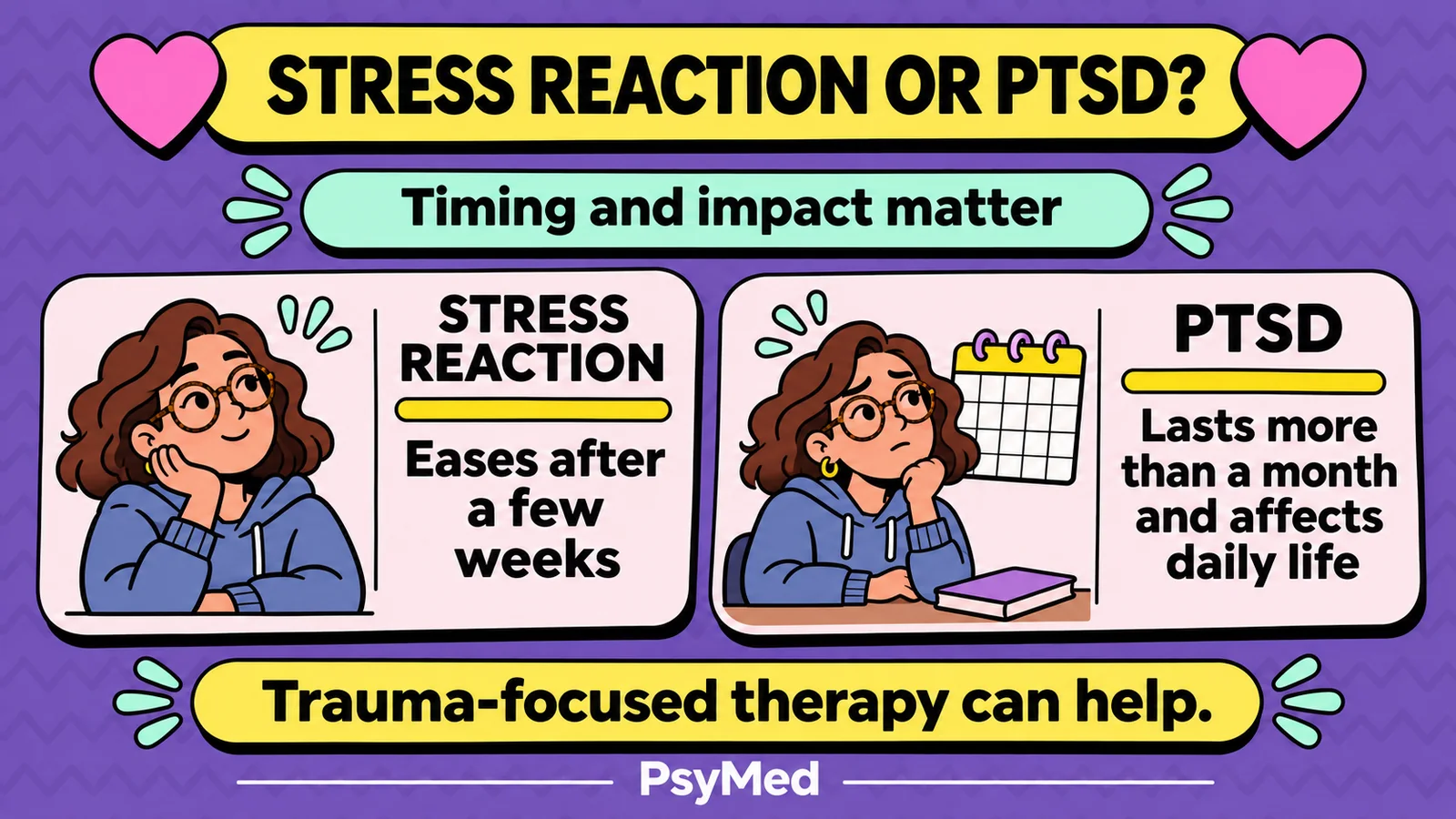
The VA National Center for PTSD reports that initial research suggests a PCL-5 cutoff score of 31–33 indicates probable PTSD across samples.
View sourceUnderstand the themes
The PTSD symptoms the PCL-5 covers
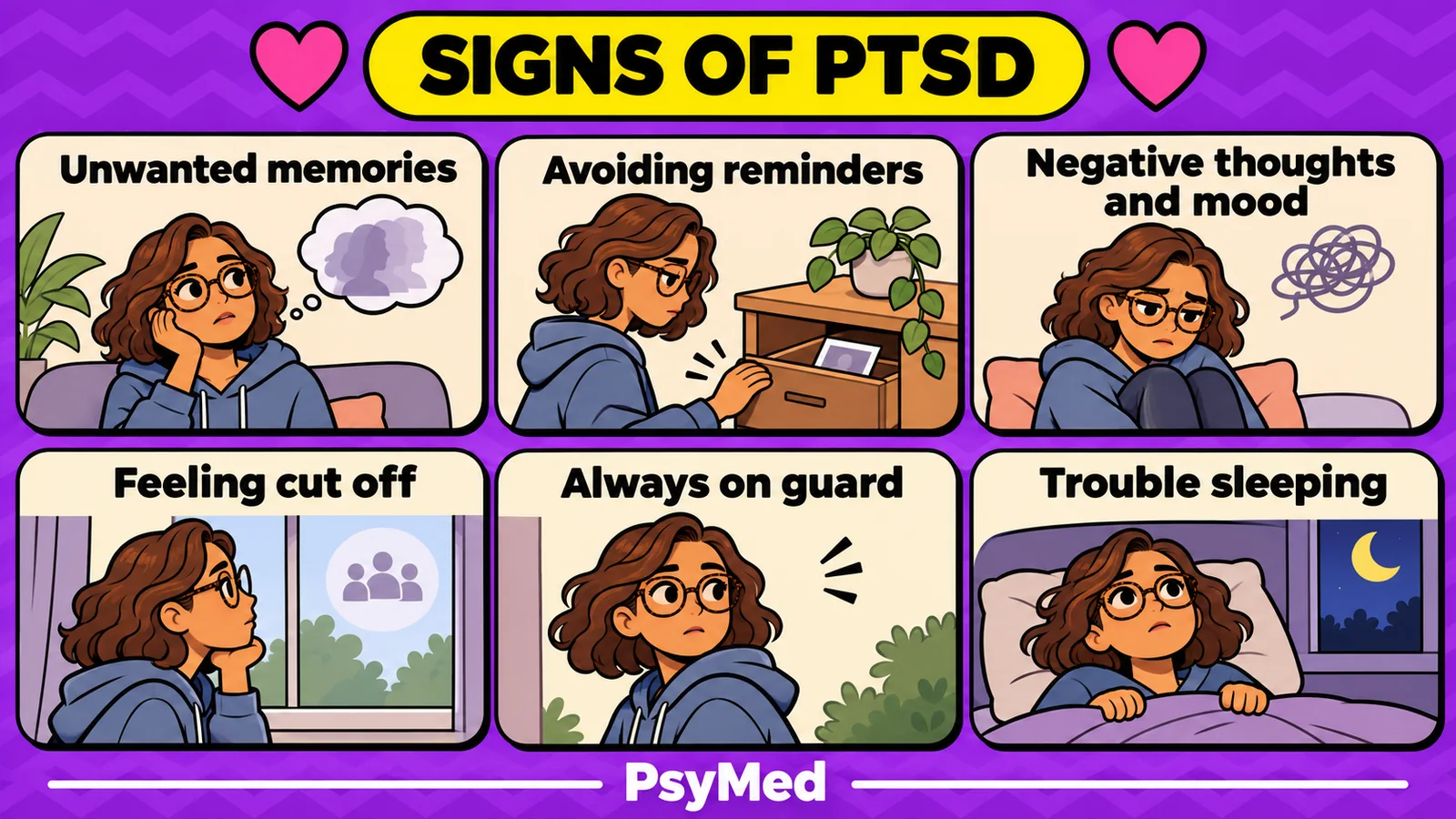
The 20 statements map onto the four DSM-5 symptom clusters, shown here as six themes.
Re-experiencing
Unwanted, repeated memories, nightmares and flashbacks, sometimes with a racing heart or sweating. NIMH notes that words, objects or situations that remind you of the event can trigger them.
Avoidance
Staying away from places, events or objects that are reminders, and avoiding thoughts or feelings about the event. Avoidance can change routines, such as not driving after a serious car accident.
Negative thoughts and mood
Ongoing fear, anger, guilt or shame, exaggerated blame of yourself or others, and harsh beliefs such as “I am bad” or “the world is completely dangerous.”
Feeling cut off
Losing interest in activities you used to enjoy, feeling distant from friends or family and finding it hard to feel happiness or loving feelings.
Arousal and reactivity
Feeling tense, on guard or easily startled, irritable or angry outbursts and risky or reckless behaviour. NIMH notes that arousal symptoms are often constant.
Sleep, concentration and memory
Trouble falling or staying asleep and difficulty concentrating are arousal symptoms. Trouble remembering important parts of the event belongs to the thoughts-and-mood cluster.
PTSD, complex PTSD and related reactions
These conditions overlap. A clinician separates them by timing, symptoms and history.
| Condition | Key feature | Where to look next |
|---|---|---|
| Normal stress reaction | Upsetting memories, feeling on edge or poor sleep that ease after a few weeks. | The VA notes most people start to feel better after a few weeks. Seek help if things are not easing. |
| Acute stress disorder | Symptoms within a month of the event, lasting 3 days to 1 month. | The MSD Manual notes PTSD may follow it or develop separately up to 6 months after the event. |
| PTSD | Symptoms last more than a month, interfere with daily life and are not explained by substances or illness. | Ask about a PTSD assessment and trauma-focused therapy. |
| Complex PTSD | A separate ICD-11 diagnosis; the DSM-5 includes these more complex responses within PTSD. | Try the complex PTSD test and discuss repeated or prolonged trauma with a professional. |
| Depression or anxiety | Low mood or worry without trauma-specific re-experiencing or avoidance. | Mention all symptoms. NIMH notes PTSD often occurs with depression and anxiety disorders. |
Interpretation and context
How a professional diagnoses PTSD
A mental health professional with experience in PTSD can confirm the diagnosis and plan treatment.
- 01 SYMPTOMS
Describe what you are experiencing
Bring your PCL-5 answers and say which symptoms bother you most, when they started and how long they have lasted. You can describe the effects without going into detail about the event if you are not ready.
- 02 IMPACT
Explain what the symptoms affect
Mention sleep, work, relationships and anything you now avoid because of the experience, such as driving, crowds or certain conversations. A diagnosis requires that symptoms interfere with daily life.
- 03 SAFETY
Talk about ongoing risk
Say if you are still in an unsafe situation, using alcohol or drugs to cope, or having thoughts of suicide. NIMH notes that when trauma is ongoing, such as in an abusive relationship, treatment works best when it addresses both.
NIMH notes that people who have PTSD may also have panic disorder, depression, substance use or suicidal thoughts, and that treating these can help recovery. Mention them even though the PCL-5 does not ask. A clinician will also check that the symptoms are not explained by medication, substance use or another illness. If symptoms do not improve after 6 to 8 weeks of treatment, NIMH suggests raising it with the health care provider.
Context matters
Why some people develop PTSD
Anyone can develop PTSD at any age. NIMH lists factors that make it more likely.
Earlier trauma
NIMH lists previous traumatic experiences, particularly in childhood, as a risk factor. Anyone can develop PTSD at any age, including people who have experienced or witnessed assault, abuse, an accident, a disaster or combat.
What happened during the event
Getting hurt, seeing people hurt or killed, and feeling horror, helplessness or extreme fear make PTSD more likely. Biological factors, such as genes, also play a part.
What happens afterwards
Little or no social support after the event, and extra stress such as the loss of a loved one, pain and injury, or losing a job or home, increase the risk. Support from others is one of the things that helps recovery. NIMH also lists resilience factors that lower the risk: seeking support from friends, family or support groups, learning to feel okay with how you responded to the event, having a coping strategy, and being able to respond to upsetting events despite feeling fear.
Useful support
Treatment for PTSD
NIMH says the main treatments are psychotherapy, medicines, or both, guided by a professional experienced in PTSD.
- 01 / THERAPY
Trauma-focused talking therapy
The NHS lists trauma-focused cognitive behavioural therapy (CBT) and eye movement desensitisation and reprocessing (EMDR) among PTSD treatments. NIMH notes psychotherapy usually lasts 6 to 12 weeks but can take longer.
- 02 / MEDICINE
Antidepressants for some people
The NHS notes that medicines, usually an antidepressant, may be offered, and that they can cause side effects. NIMH says psychotherapy and medicines can be used alone or together.
- 03 / SUPPORT
People around you
NIMH reports that support from family and friends can be an essential part of recovery. Treatment can take place one to one or in a group. If you are supporting someone else, NIMH suggests helping them get a diagnosis and treatment, offering patience and encouragement, listening carefully and sharing positive distractions such as walks and outings.
NIMH and the NHS describe psychotherapy, including trauma-focused therapies, and medicines as the main PTSD treatments.
Practical next steps
Three practical steps after the PCL-5
Pick one step that feels manageable, then decide who can help you take the next one.
- 01
Save your answers
Note your total and the statements you rated Quite a bit or Extremely. Write down roughly when symptoms began and what they stop you doing, so you can share it at an appointment.
- 02
Ask for an assessment
Contact a doctor or mental health professional who has experience treating PTSD. NIMH recommends working with someone experienced in PTSD to find the right treatment plan.
- 03
Lean on one person
Tell someone you trust how you are doing. You do not have to share the details of the event. Support from family and friends helps recovery. NIMH also suggests keeping routines for meals, exercise and sleep, setting realistic goals, expecting symptoms to improve gradually and avoiding alcohol and drugs.
If you are thinking about suicide or feel unsafe, call or text 988 (Suicide & Crisis Lifeline) in the US, text HOME to 741741 to reach the Crisis Text Line, or find a helpline outside the US at findahelpline.com. If you are in immediate danger, call your local emergency number now.
Good questions to ask
PTSD test FAQs
How to read your PTSD test score and when to ask for help.
PTSD is a mental health condition that can develop after a traumatic event. Symptoms last more than a month and include re-experiencing the event, avoiding reminders, negative changes in thoughts and mood, and feeling tense or on edge. They must interfere with daily life to meet the criteria. NIMH notes that it is natural to feel afraid during and after a traumatic situation, and that most people recover from their symptoms over time.
The PCL-5 (PTSD Checklist for DSM-5) is a 20-item self-report questionnaire developed by the VA National Center for PTSD. It rates each of the 20 DSM-5 PTSD symptoms from 0 to 4 for the past month. It is in the public domain.
The VA reports that a PCL-5 cutoff between 31 and 33 indicates probable PTSD across samples. A score in that range or above is a reason for a professional assessment, not a diagnosis on its own.
No. An online PTSD test can show how much symptoms bother you, but a diagnosis requires an assessment by a qualified professional. They consider the event, how long symptoms have lasted, their effect on daily life and whether something else explains them.
Symptoms usually begin within 3 months of a traumatic event, but they sometimes emerge later. The MSD Manual notes that PTSD can continue from acute stress disorder or develop separately up to 6 months after the event. The course varies: some people recover within 6 months, while others have symptoms that last a year or longer.
The ICD-11 lists complex PTSD as a separate diagnosis related to PTSD, while the DSM-5 includes these more complex responses within PTSD. Complex PTSD was proposed to be more common after repeated, prolonged interpersonal trauma, especially early in life.
In the ICD-10-CM coding system used in the US, F43.10 is the code for post-traumatic stress disorder, unspecified. Older records use 309.81, the ICD-9-CM code for posttraumatic stress disorder, which converts approximately to F43.10. A clinician assigns a code only after a diagnostic assessment.
PTSD is tied to a traumatic event and includes re-experiencing it and avoiding reminders. Anxiety disorders such as generalized anxiety disorder are not. They often occur together, so a professional can assess both. Our anxiety test can help you look at worry, panic and social fear.
Yes. NIMH notes that not everyone with PTSD has been through a dangerous event themselves. Learning that a relative or close friend experienced trauma can cause PTSD.
The NHS lists trauma-focused cognitive behavioural therapy (CBT) and eye movement desensitisation and reprocessing (EMDR) as PTSD treatments, with antidepressants for some people. NIMH notes the main treatments are psychotherapy, medicines or both, chosen with an experienced professional. NIMH notes that psychotherapy usually lasts 6 to 12 weeks but can take longer, and it can take place one to one or in a group.
Editorial transparency
Sources and review information
Prepared by the PsyMed Editorial Team. This is an educational page, not a clinical assessment, and no licensed clinical reviewer is claimed. Sources checked: November 23, 2026. The PCL-5 was developed by the VA National Center for PTSD and is in the public domain. The existing 20 statements, answer choices, point values and score ranges are preserved. Read how we build our tests and who we are.
References
- VA National Center for PTSD. PTSD Checklist for DSM-5 (PCL-5)
- Blevins CA, et al. The PCL-5: development and initial psychometric evaluation. J Trauma Stress, 2015
- NIMH. Post-Traumatic Stress Disorder
- NHS. Post-traumatic stress disorder (PTSD): treatment
- MSD Manual Consumer Version. Posttraumatic Stress Disorder (PTSD)
- MSD Manual Consumer Version. Acute Stress Disorder
- VA National Center for PTSD. Complex PTSD: history and definitions
- ICD-10-CM F43.10. Post-traumatic stress disorder, unspecified
- ICD-9-CM 309.81. Posttraumatic stress disorder
- VA National Center for PTSD. PTSD basics
One useful observation
You do not have to work through trauma alone
Your answers can help you explain what you are going through and get the right support.
Take the self-check